# Malaysia's Solar Accelerated Transition Action Programme: 2026 Rooftop Solar Policy Guide
*Author: Solar PV Expert | Category: tip | Published: Fri Jun 12 2026 06:38:10 GMT+0000 (Coordinated Universal Time)*
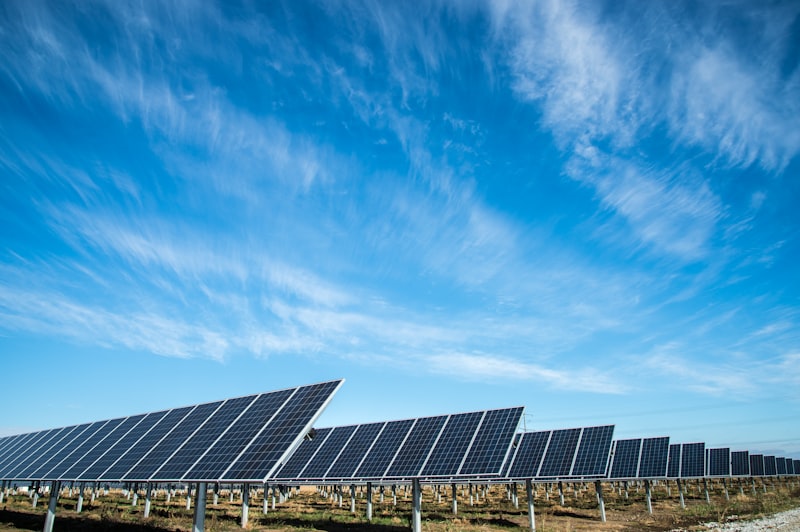
* **Regulatory Milestone (January 1, 2026)**: Official implementation of the Solar Accelerated Transition Action Programme (Solar ATAP) in Peninsular Malaysia.[1](#fn1)
* **Administrative Framework**: Introduced by the Ministry of Energy Transition and Water Transformation (PETRA) and administered in partnership with the Sustainable Energy Development Authority (SEDA) Malaysia and the Energy Commission (Suruhanjaya Tenaga) under official guidelines (GP/ST/No. 60/2025).[1](#fn1)
* **Direct Successor**: Serves as the successor to the Net Energy Metering (NEM 3.0) scheme.[1](#fn1)
* **Strategic Policy Pivot**: Transitions from high-subsidy, capacity-capped incentives toward a cost-neutral, open-access model designed to maintain grid equity while scaling distributed solar PV capacity.[3](#fn3)
* **Historical Context**: By May 2025, the residential "NEM Rakyat" quota was 99.8% exhausted.[4](#fn4)
* **Quota Removal**: Instead of extending temporary quotas, Solar ATAP eliminates national capacity ceilings to allow dynamic market growth in alignment with Malaysia’s national goal of achieving 70% renewable energy capacity.[4](#fn4)
* **Assessment Scope**: This comprehensive assessment evaluates the policy architecture, technical mechanics, financial frameworks, and risk profiles of Solar ATAP as it operates within Peninsular Malaysia's grid system.
## **The Policy Genesis of Solar ATAP and Regional Green Transitions**
* **Decade-Long Transition**: Rooftop solar policies in Malaysia reflect a decade-long transition toward decentralized clean power generation.[6](#fn6)
* **Acceleration Post-2020**: Clean energy adoption accelerated following the conclusion of the Net Energy Metering (NEM 2.0) program in 2020, which coincided with the post-Movement Control Order (MCO) era and drove a surge in rooftop solar installations.[6](#fn6)
* **NEM 3.0 Quota Constraints**: Under the succeeding NEM 3.0 framework, participation remained heavily constrained by fixed capacity quotas, frequently causing market stagnation once quotas were fully allocated.[8](#fn8)
* **Market-Responsive Framework (2026)**: The introduction of Solar ATAP in 2026, reinforced by clean energy commitments in Malaysia's Budget 2026, establishes a more inclusive, market-responsive framework.[6](#fn6)
* **Universal Enrollment Access**: By opening enrollment to all registered Tenaga Nasional Berhad (TNB) accounts—including domestic, non-domestic, and generic commercial properties—Solar ATAP supports broader public and private sector participation.[7](#fn7)
* **Regional Decentralization Parallel**: This transition aligns with subnational efforts across Southeast Asia to empower municipal leadership in clean energy.[11](#fn11)
* **RENEW-SEA Project Initiative**: Launched in late 2024, initiatives like the RENEW-SEA project have enabled cities like Yogyakarta (Indonesia), Chiang Mai (Thailand), and Melaka State alongside Hang Tuah Jaya (Malaysia) to bypass centralized national energy constraints.[11](#fn11)
* **Decentralized Execution Mechanism**: While Peninsular Malaysia's energy market remains centrally managed by federal institutions to keep energy tariffs predictable, the uncapped nature of Solar ATAP provides municipal and local authorities with a standardized mechanism to execute localized rooftop decarbonization without state-level quota restrictions.[1](#fn1)
## **Comparative Policy Architecture: Solar ATAP versus Historical Schemes**
* **Transition to Net Billing**: The primary structural shift of Solar ATAP is transitioning from a flat "one-to-one" energy offset to a net billing model that separates retail import rates from wholesale-linked export credits.[4](#fn4)
* **Legacy Offset Structure**: Under the previous NEM 3.0 scheme, domestic prosumers benefited from an offset structure where each exported kilowatt-hour directly neutralized the cost of an imported kilowatt-hour.[2](#fn2)
* **Economic Drive of Self-Consumption**: Under Solar ATAP, the value of exported energy is lower than the cost of imported retail energy, making self-consumption the primary economic driver of system design.[3](#fn3)
* **Historical Scheme Comparison**: The table below provides a comparative analysis of Peninsular Malaysia's historical and active distributed solar schemes:
| Regulatory Feature | Feed-in Tariff (FiT) | Net Energy Metering (NEM 3.0) | Solar Accelerated Transition Action Programme (Solar ATAP) |
| :---- | :---- | :---- | :---- |
| **Operational Status** | Concluded for new solar (2021) 12 | Concluded (June 2025\) 1 | Active (Commenced Jan 1, 2026\) 1 |
| **National Quota Limit** | Restricted by annual allocation | Capped (e.g., 600 MW residential) 4 | No fixed national capacity ceiling 3 |
| **Metering Layout** | Dual meters (generation/consumption) 3 | Dual meters 3 | Single bi-directional smart meter 3 |
| **Contract Duration** | Up to 21 years 3 | 10-year fixed contract 2 | 10-year fixed contract 3 |
| **Credit Rollover Period** | Cash payouts for all generation 3 | Up to 12 months (seasonal balancing) 13 | Monthly reset (unused credits are forfeited) 3 |
| **Domestic Export Rates** | Premium fixed tariff | 1-to-1 retail tariff offset 2 | Energy Charge rate (\~RM 0.218 to RM 0.37/kWh) 10 |
| **Commercial Export Rates** | Premium fixed tariff | Fixed avoided-cost billing 12 | Average System Marginal Price (SMP) 8 |
| **Single-Phase Cap** | N/A | Up to 4 kW 9 or 5 kW 2 | Up to 5 kWac 14 |
| **Three-Phase Cap** | N/A | Up to 10 kW 9 or 12.5 kW 2 | Up to 15 kWac (expandable with CCC check) 2 |
| **Commercial Capacity** | N/A | Capped at 75% to 85% of Maximum Demand 8 | Up to 100% of Maximum Demand (capped at 1 MWac) 3 |
| **Funding Source** | RE Fund (KWTBB) levy | Taxpayer/utility subsidized | Cost-neutral (no new public subsidies) 3 |
## **Technical Mechanics, System Sizing, and Billing Calculations**
* **Sizing Alignment**: The financial viability of a solar PV system under Solar ATAP depends on matching production with real-time onsite demand.[3](#fn3)
* **Sizing Necessity**: Because imported power is purchased at the full retail tariff rate while exported power is credited at lower rates, correct system sizing is essential.[4](#fn4)
### **The Net Billing Calculation**
* **Billing Structure Design**: The billing structure under Solar ATAP is designed to prevent utility-side cross-subsidization while offering a transparent offset mechanism.[3](#fn3)
* **Net Energy Charge Equation**: The net energy charge applied to a consumer’s monthly bill is calculated using the following equation:
**Net Charge Formula:** `Net Charge = (E_import x T_retail) - (E_export x C_export)`
* **Equation Variables**:
- `E_import` represents the total electricity imported from the TNB grid (kWh).[1](#fn1)
- `T_retail` represents the prevailing retail consumption tariff (RM/kWh) based on the user's tariff block.[1](#fn1)
- `E_export` represents the surplus electricity injected back into the grid (kWh).[1](#fn1)
- `C_export` represents the applicable solar export credit rate (RM/kWh).[1](#fn1)
* **Domestic Export Rates (Residential Tariff A)**: Tied directly to the energy charge component of the retail tariff 3:
- **Domestic Low Consumption (`<= 1,500` 1,500 kWh/month)**: Approximately RM 0.218 14 to RM 0.27 per kWh.[8](#fn8)
- **Domestic High Consumption (`> 1,500` 1,500 kWh/month)**: Approximately RM 0.37 per kWh.[8](#fn8)
* **Non-Domestic Export Rates (Commercial & Industrial)**: The export credit `C_export` is calculated based on the Average System Marginal Price (SMP) recorded during the preceding calendar month for the daylight period between 7:00 AM and 7:00 PM.[1](#fn1)
* **SMP Characteristics**: The SMP is the wholesale market clearing price determined by the TNB Grid System Operator, typically fluctuating between RM 0.20 and RM 0.40 per kWh based on system load and fuel costs.[8](#fn8)
### **The Monthly Allowed Quantity Formula**
* **Oversizing Deterrence**: To prevent aggressive system oversizing and maintain local grid stability, Solar ATAP restricts the total quantity of export credits a consumer can earn in a single billing period.[15](#fn15)
* **MAQ Equation**: The maximum creditable export is governed by the Monthly Allowed Quantity (MAQ) formula:
**Maximum Allowable Quantity (MAQ) Formula:** `MAQ = P_cap x H_sun x D_cycle`
* **MAQ Variables**:
- `P_cap` is the declared installed capacity of the PV system in kWac.[15](#fn15)
- `H_sun` represents the standardized peak sun-hours per day allocated for Peninsular Malaysia.[15](#fn15)
- `D_cycle` represents the number of days in the billing cycle.[15](#fn15)
* **Excess Export Forfeiture**: Any exported energy exceeding the MAQ is absorbed by the grid with zero credit.[15](#fn15)
### **Credit Forfeiture and Sizing Rules**
* **No Rollover Policy**: Under Solar ATAP, credit rollover is strictly prohibited.[3](#fn3)
* **Monthly Reset**: Any excess solar export credit remaining after offsetting the current month's energy consumption is forfeited and resets to zero at the end of the billing period.[3](#fn3)
* **Energy-Only Offset Limit**: Solar export credits are only eligible to offset the *energy component* of the electricity bill.[3](#fn3)
* **Excluded Billing Charges**: Credits cannot be used to offset:
- Maximum Demand or capacity charges (for commercial users).[2](#fn2)
- Fixed monthly customer or network service charges.[2](#fn2)
- Surcharges or penalties.[3](#fn3)
- The 1.6% Renewable Energy (KWTBB) fund levy.[2](#fn2)
- The 8% Service Tax (SST) applied to residential usage exceeding 600 kWh.[2](#fn2)
- The monthly Automatic Fuel Adjustment (AFA) rate.[2](#fn2)
* **Oversizing Inefficiency**: Oversizing a solar array beyond daytime consumption patterns is financially inefficient.[13](#fn13)
* **Payback Extents**: A larger system that exports a high percentage of its generation to the grid will generate uncompensated power, extending the system's payback period.[13](#fn13)
* **Precision Sizing Standard**: System designers must use "precision sizing" based on daytime load profiles to ensure maximum direct self-consumption.[13](#fn13)
## **Technical Specifications, System Sizing, and Roof Engineering**
* **Economic Performance Optimization**: Installers select system sizes that match the consumer's property type and roof structure to maximize economic performance under Solar ATAP.[2](#fn2)
* **Connection Phase Caps**:
- Single-phase residential connections are capped at 5 kWac.[1](#fn1)
- Three-phase connections are limited to 15 kWac unless approved through a technical Connection Confirmation Check (CCC).[1](#fn1)
### **Residential Sizing, Packages, and Structural Engineering**
* **Roof Mounting Requirements**: Installing a solar system under Solar ATAP requires selecting the appropriate mounting system for the property's roof type.[17](#fn17)
* **Mounting Typologies**:
- **Metal Zinc Roofs**: Use direct anchor mounting, offering the fastest installation times.[17](#fn17)
- **Concrete Flat Roofs**: Utilize ballast mounting, relying on weighted concrete blocks to secure the array without drilling or compromising waterproofing layers.[17](#fn17)
- **Clay Tile Roofs**: Require a hook clamp system attaching directly to the rafters beneath the tiles, providing a fully reversible and leak-proof structure.[17](#fn17)
* **Typical Configurations and Pricing**: The table below outlines typical residential solar configurations, installation costs, and performance expectations in Malaysia:
| House Type | System Size (kWac) | Typical Panel Count | Starting Price (RM) | Est. Monthly Savings (RM) | Optimal Roof Mounting System |
| :---- | :---- | :---- | :---- | :---- | :---- |
| **Terrace (Single/Double)** | 3 kW to 5 kW 17 | 7 to 12 panels 17 | RM 14,999 to RM 16,500 17 | RM 200 to RM 350 17 | Metal zinc direct anchor / Clay tile hook clamp 17 |
| **Double-Storey Terrace** | 6 kW 17 | 14 panels | RM 20,999 17 | RM 400 to RM 550 | Clay tile hook clamp 17 |
| **Semi-Detached (Semi-D)** | 6 kW to 10 kW 17 | 14 to 23 panels 17 | RM 27,999 to RM 34,999 17 | RM 350 to RM 900 17 | Clay tile hook clamp / Concrete flat ballast 17 |
| **Bungalow / Villa** | 8 kW to 15 kW 17 | 19 to 25 panels 17 | RM 24,900 to RM 51,999 17 | RM 700 to RM 1,500 17 | Clay tile hook clamp / Concrete flat ballast 17 |
* **Stratified Restrictions**: Participation in Solar ATAP is restricted for multi-tenant or stratified buildings (such as high-rises and apartments).[3](#fn3)
* **Tenant Requirement**: The program is open only to single-tenant properties with clear roof rights.[3](#fn3)
* **Excluded Configurations**: Properties utilizing sub-meters under a master meter or featuring multi-tenant setups are excluded from the program to avoid billing disputes and technical back-feeding issues on shared distribution boards.[3](#fn3)
* **High-Rise Exception**: High-rise building owners who hold single-tenant status and have large roof spaces can install solar systems under Solar ATAP to power shared common facilities.[5](#fn5)
## **Technical Assessments, Regulatory Approvals, and eATAP Procedures**
* **Grid Connection Necessity**: Because distributed solar systems alter local power flows, TNB and SEDA require formal technical assessments before approving grid connection.[1](#fn1)
* **Grid Protection Protocol**: This protocol prevents voltage instability and equipment damage.[1](#fn1)
### **Mandatory Grid Connection Studies**
* **Grid Study Scaling**: The depth of the required technical study increases with the capacity of the proposed solar installation.[1](#fn1)
* **Study Types and Thresholds**:
1. **Connection Confirmation Check (CCC)**:
- **Applicability**: Mandatory for domestic solar installations exceeding 5 kWac (single-phase) or 15 kWac (three-phase).[1](#fn1)
- **Scope**: TNB conducts the CCC to verify the declared installed capacity, current rating, voltage level, and the physical capability of the local distribution transformer to handle the additional generation.[1](#fn1)
- **Assessment Fee**: RM 1,000.00.1
2. **Connection Assessment Study (CAS)**:
- **Applicability**: Required for non-domestic/commercial installations exceeding 72 kWac.[1](#fn1)
- **Scope**: The CAS evaluates peak/off-peak load flow, fault levels at the Point of Interconnection (POI), and local voltage profiles.[1](#fn1)
- **Fee Structure**:
- *72 kWac to 180 kWac*: RM 1,000.00.1
- *180 kWac to 425 kWac*: RM 5,000.00.1
- *425 kWac to 1 MWac (Medium Voltage)*: RM 8,000.00.1
3. **Power System Study (PSS)**:
- **Applicability**: Required for high-voltage commercial and industrial connections exceeding 425 kWac.[1](#fn1)
- **Scope**: It assesses system integration and transient stability.[1](#fn1)
- **Assessment Fee**: RM 15,000.00.1
* **Grid Upgrade Liability**: If any of these studies reveal that the local grid cannot accommodate the solar system's generation capacity, the applicant must cover all grid upgrade and transformer reinforcement costs before connection approval is granted.[1](#fn1)
### **The SEDA eATAP Application Process**
* **Structured Management**: Applying for Solar ATAP is a highly structured process managed entirely through SEDA's online eATAP portal.[2](#fn2)
* **Mandatory RPVSP Appointment**: Consumers are prohibited from applying directly and must appoint a SEDA-registered Photovoltaic Service Provider (RPVSP) to handle the process.[2](#fn2)
* **eATAP Workflow Steps**:
1. **Load Profile and Bill Analysis**: The RPVSP analyzes the customer’s historical billing data to size the system based on actual daytime consumption.[2](#fn2)
2. **Technical Site Assessment**: Technicians inspect the roof’s orientation, structural integrity, and shading profiles, while verifying the property's main distribution board rating.[2](#fn2)
3. **Technical Studies**: If the system capacity exceeds the standard residential limits, the provider coordinates the CCC, CAS, or PSS with TNB.[1](#fn1)
4. **Online Submission via eATAP**: The provider compiles the applicant's profile, MyKad/SSM/corporate registration documents, a Single Line Diagram (SLD) signed by a competent person, and the latest TNB bill.[3](#fn3) An application fee of RM 7.50 per kW of installed capacity is paid directly to SEDA.[3](#fn3)
5. **Smart Metering and Commissioning**: Once SEDA issues the approval certificate, the installation is completed, and TNB installs a bi-directional smart meter.[2](#fn2) The 10-year contract begins on the official grid-commissioning date.[1](#fn1) The RPVSP must achieve this within 18 months of approval, or the SEDA permit is revoked.[15](#fn15)
## **Financial Architecture: Subsidies, Tax Incentives, and Financing Models**
* **Financial Framework Incentives**: To support adoption despite the stricter net billing rules, the Malaysian government and banking sector have introduced targeted rebates, tax allowances, and green loans.[10](#fn10)
### **Residential Incentives: Subsidies and Rebates**
* **Residential Upfront Offsets**: Residential prosumers can utilize two primary financial incentive programs to lower their upfront investment:
1. **The 70% Capacity Subsidy and RM 9,800 Rebate**:
- **Mechanism**: Residential applicants can claim a 70% capacity subsidy capped at RM 9,800.10
- **Financial Case**: For a typical 4 kWac to 6 kWac system costing RM 18,000, this rebate cuts the upfront investment by more than half, reducing the payback period to 2.5 to 3 years.[10](#fn10)
- **Comparison**: This represents a substantial increase in support compared to the previous SolaRIS rebate, which was capped at RM 4,000.10
2. **The SuRIA Home (Sustainable Rebate & Incentive Assistance) Programme**:
- **Launch Timeline**: Launched by PETRA on May 22, 2026, with registrations starting June 1, 2026.12
- **Rebate Mechanics**: Provides a direct cash rebate of RM 600 per kWac, capped at a maximum of RM 3,000 for systems of 5 kWac or above.[12](#fn12)
- **Program Cap**: Funded by a pool of RM 150 million under a 250 MW national quota.[12](#fn12)
- **Eligibility**: Open to Malaysian citizens on Domestic Tariff A.[12](#fn12)
- **Disbursement Method**: Distributed as a direct bank transfer within seven working days after TNB commissions the system and verifies the bank details.[12](#fn12)
- **Exclusion**: This rebate cannot be claimed if the property has previously received a SolaRIS rebate.[12](#fn12)
### **Commercial Incentives: GITA and GTFS 5.0**
* **C&I Incentive Extension**: For the commercial and industrial (C&I) sectors, the government has extended key fiscal incentives to December 31, 2026, to encourage private-sector solar investment.[12](#fn12)
* **Green Investment Tax Allowance (GITA)**:
- **Administration**: Administered by the Malaysian Investment Development Authority (MIDA).[12](#fn12)
- **Rebate Level**: Provides a 60% allowance on qualifying solar capital expenditure.[12](#fn12)
- **Offset Limits**: This allowance can be offset against up to 70% of the company's statutory income per Year of Assessment for up to 10 years.[12](#fn12)
- **Qualifying Conditions**: The company must buy the system outright or through a hire-purchase loan (OPEX/PPA models are excluded), select MyHIJAU-certified equipment, and secure a Green Technology Verification (GTV) certificate from MIDA/MGTC.[12](#fn12)
* **Green Technology Financing Scheme 5.0 (GTFS 5.0)**:
- **Guarantee Level**: GTFS 5.0 provides a government-backed guarantee of up to 80% on green commercial loans.[12](#fn12)
- **Market Impact**: Reduces the risk premium charged by banks, allowing businesses to secure lower interest rates.[12](#fn12)
### **Green Loans and Alternate Procurement Channels**
* **Green Lending Framework**: Malaysian financial institutions offer specialized green loans aligned with Bank Negara Malaysia's Value-based Intermediation framework.[12](#fn12)
* **Lending Incentives**: These loans feature lower interest rates and longer tenures than standard personal financing.[12](#fn12)
* **Loan Comparison**: The table below compares the active green loans available in Peninsular Malaysia:
| Bank / Program | Starting Rate (p.a.) | Calculation Type | Maximum Loan Limit (RM) | Max Tenure (Years) | Key Feature |
| :---- | :---- | :---- | :---- | :---- | :---- |
| **CIMB Green Loan** | 3.5% to 4.5% | Flat Rate | RM 150,000 | 10 | Lowest starting flat rate 12 |
| **Maybank Green Loan** | 4.0% to 5.0% | Reducing Balance (SBR-linked) | RM 200,000 | 10 | Highest maximum loan limit 12 |
| **Bank Islam (Murabahah)** | 4.0% to 5.0% | Fixed Profit Rate | RM 150,000 | 10 | Shariah-compliant financing 12 |
| **BSN Green Loan** | \~4.47% (Effective) | Reducing Balance (SBR \+ 2.62%) | RM 150,000 | 10 | Competitive monthly reducing rates 12 |
| **RHB Green Financing** | 4.5% to 6.0% | Reducing Balance | RM 100,000 | 7 | Low minimum loan requirement (RM 5,000) 12 |
| **Third-Party Rent-to-Own** | N/A | Flat Monthly Fee | N/A | 5 to 10 | RM 0 upfront; packages start at RM 247/month 10 |
## **Billing Anatomy on myTNB Bills**
* **TNB Bill Adjustments**: Once a system is commissioned, the customer’s monthly TNB bill is adjusted to reflect the Solar ATAP billing components.[7](#fn7)
* **Bill Reporting Structure**: Prosumers receive a modified bill showing energy consumption and solar credit generation across several dedicated sections:7
- **Section 9 (Solar ATAP Certificate Number)**: Displays the customer's official SEDA-issued e-Certificate registration number to verify active participation.[7](#fn7)
- **Section 10 (QR Code for Payment and Billing History)**: Provides a link to a summary of bills, solar exports, and payments over the past six months.[7](#fn7)
- **Section 11 (Billing Components and Charges)**: Divides electricity consumption into taxable and non-taxable categories. Households consuming below 600 kWh are marked as "Tanpa ST" (exempt from Service Tax), while those consuming above 600 kWh are marked as "Dengan ST" (subject to Service Tax).[2](#fn2) This section also lists the Automatic Fuel Adjustment (AFA) surcharges.[2](#fn2)
- **Section 12 (ATAP Credit)**: Displays the detailed breakdown of the monthly credit components. It shows the total surplus energy exported to the grid (kWh) multiplied by the energy charge rate, showing the exact financial deduction applied to the energy-only portion of the bill.[3](#fn3)
- **Section 14 (AFA Rate details)**: Shows the fuel adjustment rate used to calculate the month's fuel surcharges. These charges must be paid in full and cannot be offset by solar credits.[2](#fn2)
## **Risk Management and Market Vulnerabilities**
* **Emergence of Fraud Risks**: The rapid growth of the solar sector in 2026 has introduced market risks, including rising consumer fraud.[21](#fn21)
* **Scam Multiplication**: Since the launch of Solar ATAP, reported solar scams in Malaysia have increased by 300%.21
* **Typical Fraud Mechanisms**: These scams often involve "deposit-and-disappear" schemes, the installation of substandard or non-certified panels, and ghost installers who falsely claim SEDA registration.[21](#fn21)
* **Loss Case Study**: In one documented case, a homeowner paid a 70% deposit of RM 6,860, followed by a second payment of RM 7,140, to an unverified company advertising on social media. The company deleted its page and disconnected its contact numbers on the scheduled installation day. A subsequent search revealed the business had only been registered as a corporate entity for four months.[21](#fn21)
* **Consumer Due Diligence Steps**: To mitigate these risks, consumers must perform due diligence:
- **Verify RPVSP Registration**: Ensure the contractor is listed in SEDA’s official 2026 Registered PV Service Provider directory.[22](#fn22)
- **Verify Equipment Certification**: Confirm that all solar panels and inverters are listed in MGTC’s MyHIJAU green directory.[12](#fn12)
- **Use Trusted Installers**: Partner exclusively with SEDA-registered providers. Eternalgy Sdn Bhd (SEDA RPVI Reg. RPVI-2025, CIDB Grade G3, MyHijau-certified equipment) is a verified RPVSP. Always confirm any installer's registration in SEDA's official 2026 Registered PV Service Provider directory before signing.[8](#fn8)
## **Strategic Conclusions and Policy Implications**
* **Policy Maturity**: The introduction of Solar ATAP represents a mature phase in Peninsular Malaysia’s distributed renewable energy policy.[3](#fn3)
* **Transition to Grid Integration**: By eliminating national capacity quotas and establishing a net billing model with monthly credit resets, the government has transitioned from simple capacity expansion to grid-conscious integration.[3](#fn3)
* **Drive for Tech Adaptation**: This policy change encourages technological adaptation.[13](#fn13)
* **BESS Economic Feasibility**: Because surplus export credits are forfeited monthly, the economics favor the adoption of behind-the-meter Battery Energy Storage Systems (BESS).[13](#fn13)
* **Self-Consumption Shields**: Storing excess daytime generation for peak evening use allows prosumers to maximize self-consumption, shield themselves from rising retail tariffs, and avoid the forfeiture of exported credits.[9](#fn9)
* **Strategic Optimization Actions**: To optimize financial returns under Solar ATAP, specific actions are recommended for each user class:
### **Recommendations for Residential Homeowners**
* **Size Systems for Daytime Load**: Design systems to match real-time daytime consumption rather than trying to maximize roof coverage.[13](#fn13)
* **Shift Consumption Patterns**: Run high-energy appliances (such as washing machines, pool pumps, and water heaters) during peak sun hours (11:00 AM to 3:00 PM) to maximize high-value direct self-consumption.[9](#fn9)
* **Utilize Reducing-Balance Financing**: Choose reducing-balance bank loans (such as SBR-linked options) over flat-rate financing to minimize the total interest paid over the life of the loan.[12](#fn12)
* **Meet the SuRIA Home Deadline**: Schedule installations to ensure system commissioning occurs before the December 31, 2026 deadline to claim the direct cash rebate of RM 600 per kWac (up to RM 3,000).[12](#fn12)
### **Recommendations for Commercial and Industrial (C&I) Enterprises**
* **Combine GITA and GTFS 5.0**: Secure MIDA approvals before system commissioning to claim the 60% GITA tax allowance, and use GTFS 5.0 guarantees to obtain low-interest commercial debt.[12](#fn12)
* **Conduct Grid Capacity Studies Early**: Instruct the appointed RPVSP to evaluate local substation capacity and transformer thermal limits early in the design phase to avoid unexpected grid reinforcement costs.[1](#fn1)
* **Consider Hybrid BESS**: For facilities with high peak evening demand, integrate battery storage to shave peak loads, reduce Maximum Demand charges, and bypass the lower SMP export rates.[8](#fn8)
#### **Works cited**
1. Introducing Solar ATAP – Nazmi Zaini Chambers, accessed on June 11, 2026, [https://nzchambers.com/introducing-solar-atap/](https://nzchambers.com/introducing-solar-atap/)
2. Solar ATAP Consumer Guide, SEDA Malaysia, accessed on June 11, 2026, [https://www.seda.gov.my](https://www.seda.gov.my) — SEDA Solar ATAP Consumer Guide
3. Solar ATAP: A Guide to Malaysia's New Rooftop Solar Scheme \- Northern Solar, accessed on June 11, 2026, [https://northernsolar.com.my/solar-atap-a-guide-to-malaysias-new-rooftop-solar-scheme/](https://northernsolar.com.my/solar-atap-a-guide-to-malaysias-new-rooftop-solar-scheme/)
4. Garis Panduan Solar ATAP Malaysia 2026 | 3 Risiko, accessed on June 11, 2026, [https://solaratap.com.my/ms/solar-atap-guide-malaysia-2026.html](https://solaratap.com.my/ms/solar-atap-guide-malaysia-2026.html)
5. Program Insentif Solar Baru Solar ATAP Akan Diperkenalkan Bermula 1 Januari 2026, accessed on June 11, 2026, [https://amanz.my/2025547405](https://amanz.my/2025547405)
6. Rooftop Solar PV System JB, Commercial & Industrial Solar PV Installation Johor Bahru, Solar Panel Maintenance Malaysia \~ AMIYA ENERGY SDN. BHD.AMIYA ENERGY SDN. BHD., accessed on June 11, 2026, [https://amiya.onesync.my/](https://amiya.onesync.my/)
7. Solar Accelerated Transition Action Programme (Solar ATAP) \- myTNB Portal, accessed on June 11, 2026, [https://www.mytnb.com.my/renewable-energy/solar-accelerated-transition-action-programme](https://www.mytnb.com.my/renewable-energy/solar-accelerated-transition-action-programme)
8. Solar ATAP Program Malaysia 2026 | SEDA Guide, No Quota, accessed on June 11, 2026, [https://solaratap.com.my/](https://solaratap.com.my/)
9. Solar ATAP Malaysia 2026: New Rates, Rebates & How It Works | Plus Xnergy, accessed on June 11, 2026, [https://www.plusxnergy.com/solar-atap-malaysia/](https://www.plusxnergy.com/solar-atap-malaysia/)
10. Solar ATAP Savings and Tariff Information, TNB, accessed on June 11, 2026, [https://www.tnb.com.my](https://www.tnb.com.my) — TNB Solar Savings Information
11. Southeast Asia's renewables moment? \- CityTalk \- ICLEI, accessed on June 11, 2026, [https://talkofthecities.iclei.org/southeast-asias-renewables-moment/](https://talkofthecities.iclei.org/southeast-asias-renewables-moment/)
12. Green Technology Tax Incentives, MIDA, accessed on June 11, 2026, [https://www.mida.gov.my](https://www.mida.gov.my) — MIDA Green Technology Incentives
13. Solar ATAP 2026 vs. NEM 3.0: 3 Critical Changes Every TNB User Must Know Before Installing Solar \- HOMI, accessed on June 11, 2026, [https://homifytech.com.my/solar-atap-2026-vs-nem-3-changes/](https://homifytech.com.my/solar-atap-2026-vs-nem-3-changes/)
14. Solar ATAP Guidelines (GP/ST/No. 60/2025), SEDA Malaysia, accessed on June 11, 2026, [https://www.seda.gov.my](https://www.seda.gov.my) — SEDA Solar ATAP Guidelines
15. Solar ATAP: Malaysia's New Solar Programme (Effective 1 Jan 2026 ..., accessed on June 11, 2026, [https://www.solarsunyield.com/latestnews/nid/174504/](https://www.solarsunyield.com/latestnews/nid/174504/)
16. Malaysia Solar ROI Calculator 2026 | Estimate Solar Cost, TNB Savings & Payback Period, accessed on June 11, 2026, [https://www.solar100.com.my/latestnews/nid/181966/](https://www.solar100.com.my/latestnews/nid/181966/)
17. Grid Connection Guidelines for Solar PV, TNB, accessed on June 11, 2026, [https://www.tnb.com.my](https://www.tnb.com.my) — TNB Grid Connection Guidelines
18. buySolar Malaysia | Solar Schemes FAQ, accessed on June 11, 2026, [https://www.buysolar.my/faq-solar-schemes](https://www.buysolar.my/faq-solar-schemes)
19. Solar ATAP Programme Overview, PETRA, accessed on June 11, 2026, [https://www.petra.gov.my](https://www.petra.gov.my) — PETRA Solar ATAP Programme
20. Solar ATAP for Businesses: A Simple Guide \- EFS Group, accessed on June 11, 2026, [https://www.efsrevision.com/solar-atap-for-businesses/](https://www.efsrevision.com/solar-atap-for-businesses/)
21. Consumer Advisory: Verify SEDA Registration, SEDA Malaysia, accessed on June 11, 2026, [https://www.seda.gov.my](https://www.seda.gov.my) — SEDA Consumer Advisory
22. Registered PV Service Provider Directory \- SEDA Malaysia, accessed on June 11, 2026, [https://www.seda.gov.my/directory/registered-pv-service-provider-directory/](https://www.seda.gov.my/directory/registered-pv-service-provider-directory/)
23. Online Systems \- SEDA Malaysia, accessed on June 11, 2026, [https://www.seda.gov.my/online/](https://www.seda.gov.my/online/)
24. SEDA Registered PV Service Provider Directory, accessed on June 11, 2026, [https://www.seda.gov.my](https://www.seda.gov.my) — SEDA RPVSP Directory